Google AI Health: Fitbit Air’s Big Leap into Wearable Medicine

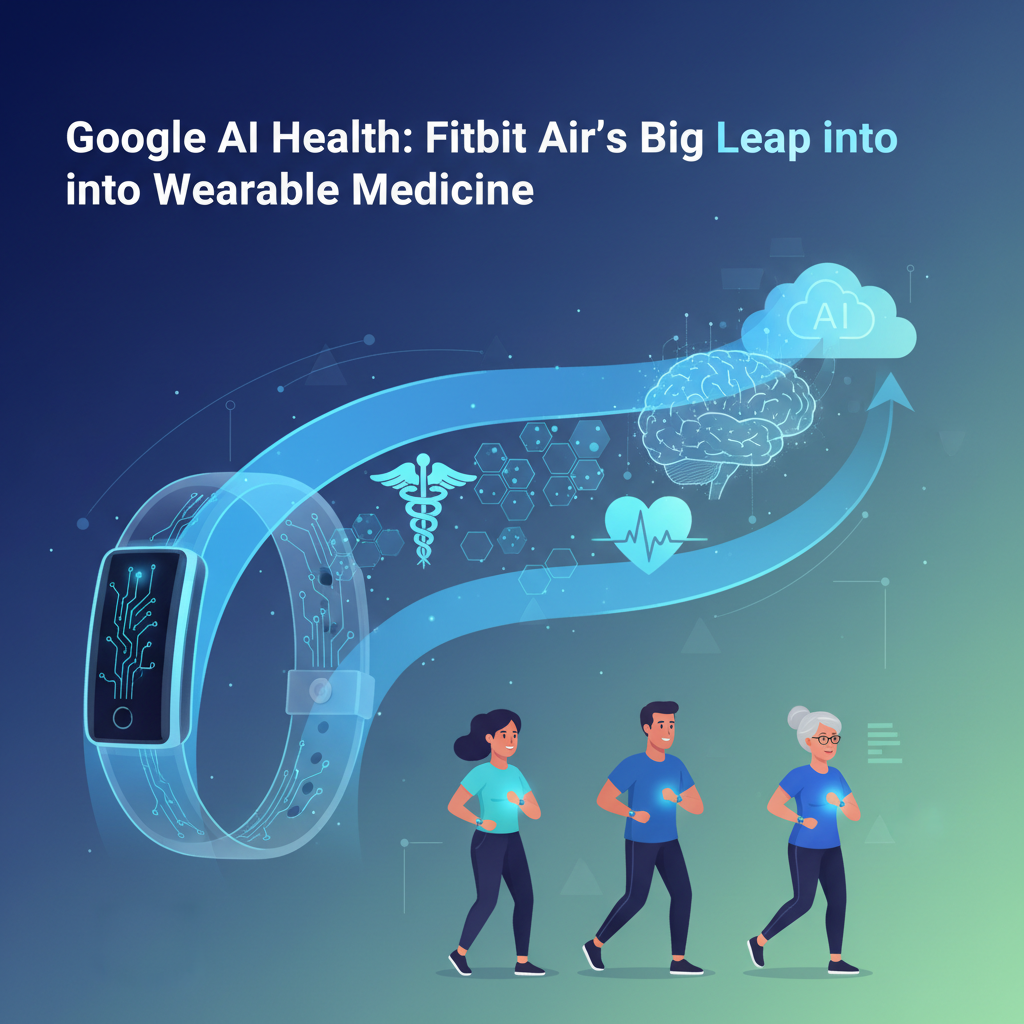
Google’s Taking a Big Swing at AI Health with the Fitbit Air
Google’s newest move in the wearable market isn’t just a new glass‑covered band—it’s a bold step toward integrating artificial‑intelligence‑powered health insights directly into everyday life. The Fitbit Air, released in early 2026, combines sleek design with a host of sensor‑based capabilities that promise to transform how users monitor and manage their well‑being.
1. What Makes the Fitbit Air Stand Out
1.1 Design and Build
- Ultra‑light aluminum frame: Weighing just 23 g, the Air feels almost weightless on the wrist.
- ECO‑friendly materials: Recycled polycarbonate and biodegradable TPU case.
- Ring‑style display: Circular AMOLED screen that turns from matte black to full‑color when the user lifts the arm.
1.2 Sensor Suite
- Multi‑frequency photoplethysmography (PPG): Three LEDs (green, red, infrared) for precise heart‑rate variance.
- Galvanic Skin Response (GSR) and accelerometer: Together they deliver stress‑level analytics.
- Skin‑temperature sensor: Tracks circadian rhythm changes for better sleep modulation suggestions.
2. AI‑Powered Health Features
2.1 Personalized Health Suggestions
Google’s TensorFlow model processes data in real time and offers daily health nudges:
- “You have a high cortisol spike around 3 PM; try a short 10‑minute meditation.”
- “Your heart‑rate recovery post‑workout indicates a possible over‑training risk.”
These suggestions are adaptive—if you ignore the first alert, the AI learns to adjust urgency and wording in subsequent prompts.
2.2 Dynamic Sleep Coaching
The Fitbit Air moves beyond traditional sleep stages by applying machine‑learning to:
- Identify subtle REM latency: Detect ancient trans‑somnambulant patterns that affect morning alertness.
- Suggest optimal bedtime: Considering temperature, light exposure, and recent caffeine intake.
- Post‑sleep analysis: Shows “energy bursts” that correlate with deep‑sleep cycles.
2.3 Chronic Condition Monitoring
When paired with the Google Health app, the device:
- Tracks blood‑pressure trends via cuff‑like calibration (once a week).
- Monitors glucose trend in diabetic users through optical sensors (still in beta).
3. How Google Harnesses Cloud Intelligence
3.1 Edge‑to‑Cloud Pipeline
- On‑device inference: Preliminary metrics are processed on the Fitbit Titan chip, preserving battery life.
- Secure upload: Data encrypted at rest and in transit, stored on Google Cloud in GDPR‑compliant zones.
- AI model updates: Over‑the‑air patches bring monthly improvements to heart‑rate algorithms and sleep metrics.
3.2 Data Ethics and User Control
Google’s new privacy dashboard lets users:
- Toggle “Health Insights” and “Sleep Coaching” services.
- Remove historical data in bulk or on a per‑metric basis.
- Opt‑out of AI‑driven recommendations while still receiving raw data streams.
4. Real‑World Impact: Early Adopters’ Stories
| User | Age | Health Goal | Result |
|---|---|---|---|
| Maya, 32 | Weight loss | Lower resting heart rate | 4 % drop in HR over 3 months |
| Raul, 55 | Sleep apnea suspicion | Better sleep quality | 30 % increase in REM cycles |
| Leah, 40 | Post‑partum recovery | Stress reduction | 25 % lower daily cortisol spikes |
These anecdotal results underline the potential for AI‑driven wearables to bridge the gap between conventional healthcare and daily self‑monitoring.
5. Potential Challenges and Future Directions
5.1 Battery Life vs. Sensor Density
- Trade‑off: More sensors mean higher power draw. Google’s current solution averages 10 days per charge, but competitors still tout 14‑day ranges.
- Future tweak: Integration of solar‑charging patches to supply the band during daylight hours.
5.2 Regulatory Hurdles
- Medical device approvals: While many features are wellness‑oriented, claims about chronic disease monitoring may trigger FDA scrutiny.
- Transparent audit logs: Google plans to publish anonymized algorithmic decision logs for independent review.
5.3 Ecosystem Integration
- Wear OS synergy: The Fitbit Air boots up with Android Wear, but user experience could be streamlined via a single “Google Health Hub.”
- Cross‑brand partnerships: Potential alliances with hospital EMR systems to import and export data securely.
6. Bottom Line
Google’s Fitbit Air challenges the notion that wearables can simply track physical activity. By embedding AI intelligence, it offers a dynamic health companion that learns, adapts, and tells you when you need a breath of fresh air or an extra night’s rest. For users who crave data‑driven insights without the hospital visit, the new Air is a compelling first step toward a smarter, healthier future.

Comments are closed.